Physical Address
304 North Cardinal St.
Dorchester Center, MA 02124
Physical Address
304 North Cardinal St.
Dorchester Center, MA 02124
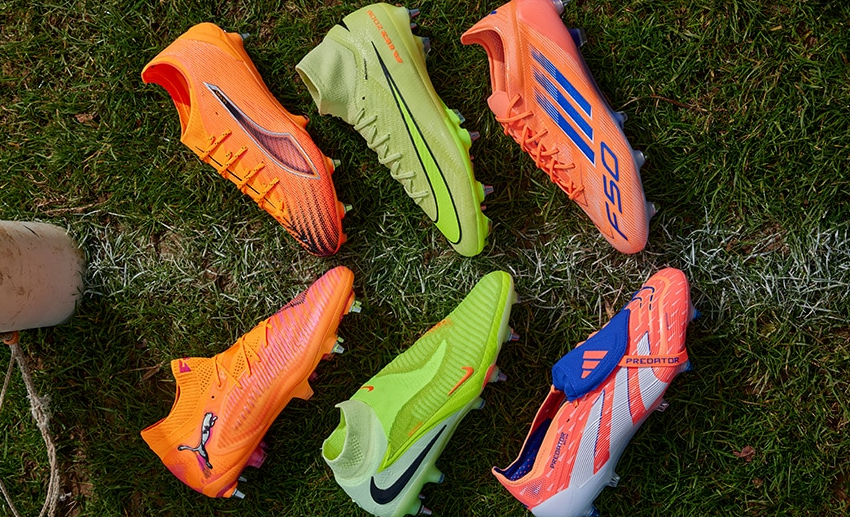
Selecting the right pair of football boots is one of the most significant decisions a player can make. The boots you wear directly influence your touch on the ball, your speed, your stability, and your overall safety on the pitch. With countless brands, technologies, and designs flooding the market, the process can feel overwhelming. This comprehensive buying guide breaks down the decision into key factors—starting with the surface you play on and moving to fit, material, and playing style—so you can find a boot that feels like a natural extension of your foot. From pitch to performance, this boots guide walks you through every stage of the process, ensuring that your next pair enhances your game rather than hinders it.
The most fundamental step in choosing football boots is identifying the surface you will play on most frequently. Wearing the wrong soleplate is not merely a performance issue; it is a significant safety hazard. Different surfaces require different stud configurations to deliver the correct balance of traction, pressure distribution, and rotational freedom. Using firm ground boots on artificial grass, for instance, can place excessive stress on your joints, increasing the risk of knee and ankle injuries, while wearing artificial grass boots on soft, muddy ground will leave you slipping and unable to accelerate or change direction effectively.
For players who compete on natural grass, the distinction between Firm Ground (FG) and Soft Ground (SG) is paramount. Firm Ground boots are designed for pitches that are dry to slightly damp with a short grass length. They typically feature a molded soleplate with a combination of bladed, conical, or triangular studs made from hard plastic or rubber. The stud arrangement provides stability and allows quick rotational movements without snagging on the turf. Soft Ground boots, on the other hand, are intended for wet, muddy, or heavily grassed fields where extra penetration is required. These boots usually have a smaller number of studs—often six or fewer—that are typically removable and made of metal. The screw-in metal studs dig deep into the mud to deliver traction in conditions where molded studs would simply clog up and lose grip.
In the modern game, artificial surfaces have become increasingly common, leading to specific boot categories designed for these environments. Artificial Grass (AG) boots are engineered specifically for modern artificial turf pitches, which feature shorter, synthetic blades. These boots use a high number of shorter, hollowed-out, or conical studs to disperse the player’s weight evenly across the foot. This design reduces pressure on the metatarsals and joints, minimizing the risk of foot fatigue and injury—a common issue when using FG boots on AG surfaces. For older, harder artificial surfaces, often referred to as “third-generation” or “sand-based” turfs, Turf (TF) boots are the ideal choice. These resemble running shoes more than traditional cleats, featuring a dense pattern of small rubber nubs on a flat outsole. They provide excellent grip on hard, artificial surfaces without the risk of stud pressure or catching, making them a popular choice for recreational players and those in indoor leagues.
Once you have determined the correct soleplate for your playing environment, the next layer of complexity lies in the upper material and construction of the boot. This aspect dictates the sensory feedback you receive from the ball, the durability of the boot, and the level of protection it offers. The material affects everything from how the ball feels when dribbling to how the boot adapts to the unique shape of your foot. Manufacturers have invested heavily in developing a range of materials, from traditional leather to advanced synthetics and knitted textiles, each offering distinct benefits that cater to different playing styles and preferences.
Leather, particularly Kangaroo leather (often referred to as K-leather) and high-grade calfskin, has long been revered for its unparalleled comfort and ball feel. The primary advantage of leather is its ability to stretch and mold to the exact contours of a player’s foot over time, creating a bespoke fit that synthetic materials often struggle to replicate. This natural material also offers a soft, cushioned touch on the ball, which is highly valued by playmakers and players who prioritize control and passing accuracy. However, the trade-off is that leather boots tend to absorb water, becoming heavier in wet conditions, and they typically require a break-in period. They also stretch over time, meaning players need to ensure a snug fit from the start to avoid the boot becoming too loose after prolonged use.
In contrast, modern synthetic materials and knitted uppers have surged in popularity, driven by advances in textile engineering. High-performance synthetics, such as polyurethane (PU) and thermoplastic polyurethane (TPU), are often combined with micro-textures to provide specific friction properties for enhanced ball control. The major benefits of synthetic boots are their lightweight nature, water resistance, and immediate out-of-the-box comfort—they require little to no break-in time. These materials retain their shape over the lifespan of the boot, ensuring consistent lockdown and fit. Furthermore, knitted technologies, like Primeknit or Flyknit, have introduced a sock-like fit that fuses the foot to the boot, offering a second-skin sensation that maximizes agility and responsiveness. These one-piece constructions often incorporate dynamic support structures, allowing for natural foot flexion while maintaining structural integrity in high-stress areas. The choice between leather and synthetic ultimately comes down to a player’s preference for natural adaptation versus immediate, high-performance stability and weight savings.
Beyond the upper, the construction of the soleplate and the integration of the heel counter are critical elements that affect power transfer and injury prevention. A well-designed soleplate uses materials like nylon, carbon fiber, or reinforced TPU to create a chassis that balances stiffness for explosive acceleration with flexibility for natural foot movement. Carbon fiber plates, often found in elite-level boots, are exceptionally stiff and lightweight, providing maximum energy return for sprinters and power hitters. However, for players who value comfort and freedom of movement, a more flexible nylon or TPU soleplate may be preferable. Similarly, the heel counter—the internal structure around the Achilles and heel—must provide a secure lock to prevent slippage. A boot that allows the heel to lift during play will inevitably lead to blisters and a lack of responsiveness. Modern boots often feature padded, anatomical heel linings that grip the foot without causing irritation, ensuring that every movement is translated directly from the foot to the boot without delay.
With the technical specifications of surface and material accounted for, the final and most personal stage of selection involves fit and the alignment of boot features with your specific role on the field. No amount of advanced technology can compensate for a boot that does not fit correctly. A proper fit should feel snug—like a firm handshake—around the midfoot and heel, with enough room in the toe box to allow the toes to splay naturally without being cramped. It is essential to try boots on with the same type of socks you would wear during a match, as thickness varies significantly. Additionally, foot shape plays a major role; players with wide feet often struggle with the narrow, streamlined fit of many modern speed boots and may need to seek out brands or specific models that offer a wider last (the foot-shaped mold on which the boot is built). It is also advisable to try on boots later in the day when feet are slightly swollen, as this better simulates the condition of your feet during a game.
Your playing style and position on the pitch should heavily influence which boot silo you gravitate toward. Manufacturers typically categorize their boots into distinct silos: speed, control, and power. Speed boots are designed for explosive players—wingers and strikers who rely on rapid acceleration and sharp directional changes. These boots are characterized by their ultra-lightweight construction, minimalistic uppers, and low-profile soleplates that keep the foot close to the ground. The focus here is on shedding weight to maximize agility. Control boots, conversely, are tailored for playmakers and technical players who demand exceptional ball feel and passing precision. These often feature textured uppers or specialized grip technologies on the instep to enhance spin and control when striking the ball. They prioritize touch over minimal weight. Power boots are aimed at players who take many shots or deliver long passes, featuring unique soleplate technologies and padded strike zones designed to provide a larger, more stable striking surface. While these categories provide a useful framework, modern boots often blur the lines, offering hybrids that combine lightweight construction with enhanced control zones.
Finally, personal preference, brand loyalty, and aesthetic appeal should not be dismissed as superficial factors. The psychological aspect of wearing a boot that makes you feel confident and comfortable is a legitimate performance enhancer. A player who feels good in their boots—whether due to the iconic three stripes of Adidas, the swoosh of Nike, the diamond logo of Puma, or the quality craftsmanship of New Balance, Mizuno, or Umbro—is more likely to perform with assurance. It is also crucial to consider the price-to-performance ratio. Elite-level boots, often marked as “.1” or “Elite,” feature the highest-grade materials and cutting-edge technology but come with a steep price tag and may have a shorter lifespan due to their focus on lightweight materials. Pro-level or “Academy” models offer a compelling compromise, utilizing similar designs and many of the same technologies with slightly heavier materials but significantly greater durability and a more accessible price point. For amateur players who play once or twice a week, these mid-tier boots often represent the best value, providing professional aesthetics and performance without the rapid wear that can accompany top-end, race-ready models.