Physical Address
304 North Cardinal St.
Dorchester Center, MA 02124
Physical Address
304 North Cardinal St.
Dorchester Center, MA 02124

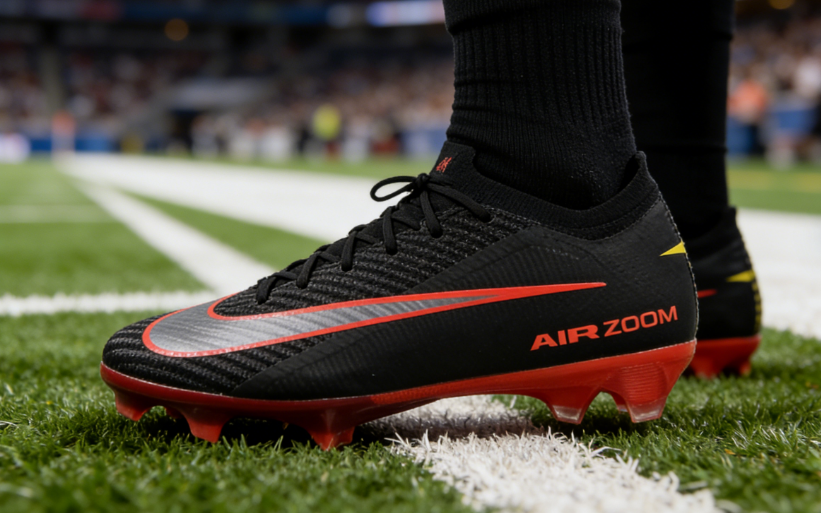
When the original Nike Mercurial was unveiled in 1998, it did more than simply introduce a new boot—it fundamentally shattered the conventions of soccer footwear. At a time when the market was dominated by heavy, black leather boots, the Mercurial arrived as a dazzling, metallic silver anomaly. Its design was not merely aesthetic; it was a declaration of intent. The boot was engineered for a new archetype of player: the explosive, dynamic winger or striker for whom a single burst of acceleration could decide a match. This philosophy was immediately validated by its most famous early adopter, the Brazilian phenomenon Ronaldo Nazário, who wore the “R9” Mercurial as he captivated the world during the 1998 FIFA World Cup. The boot became synonymous with his unique blend of power, finesse, and devastating pace, creating a legacy that would define the line for decades. The original concept was radical in its simplicity: strip away every unnecessary element, reduce weight to an absolute minimum, and create a direct, unfiltered connection between the foot and the ball, allowing for maximal efficiency at high velocity.
The evolution from that audacious debut to the sophisticated Mercurial series of today represents one of the most sustained and impactful engineering sagas in sports apparel history. Following the original model, the introduction of the Mercurial Vapor line in the early 2000s marked a pivotal shift toward synthetic materials that offered superior consistency and durability over traditional leather. Each subsequent generation, from the Vapor II to the legendary Vapor III with its revolutionary “V” heel counter and asymmetrical lacing, served as a laboratory for innovation. Designers at Nike relentlessly pursued weight reduction, shaving grams with each iteration while simultaneously enhancing structural integrity. This process was driven by an obsessive focus on biomechanics; the boots were not just made lighter, but smarter. The placement of studs, the curvature of the soleplate, and the contours of the heel were all meticulously refined to optimize energy transfer, ensuring that every stride translated into maximum forward propulsion with minimal energy loss, a principle that remains the cornerstone of the Mercurial identity.
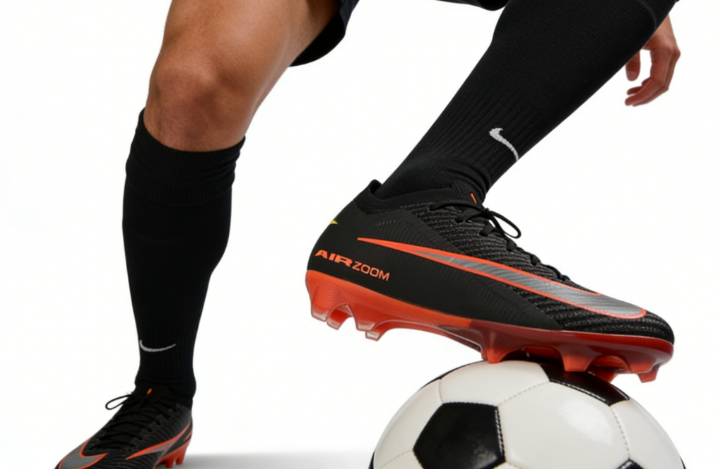
Beyond its technical achievements, the Mercurial line cultivated a powerful cultural identity that resonated deeply with a global generation of players. The boot became a canvas for audacious creativity, with Nike introducing bold, often fluorescent colorways that stood in stark contrast to the traditional black and white of the sport. This visual language—from the iconic “Electric Green” to the striking “Volt” and “What The” collections—transformed the Mercurial into a symbol of attacking flair and unapologetic ambition. It became the footwear of choice for a lineage of iconic players who defined the modern game, including Cristiano Ronaldo, who wore Mercurials throughout his record-breaking career, and current stars like Kylian Mbappé and Sam Kerr, whose blistering speed and decisive finishing embody the boot’s core philosophy. For aspiring athletes worldwide, lacing up a pair of Mercurials is more than a practical decision; it is an act of psychological alignment with a legacy of excellence, a ritual that connects them to the sport’s most electrifying moments and the athletes who have redefined the boundaries of what is possible on the pitch.
Today, the Nike Mercurial lineup is anchored by two distinct yet complementary models: the Mercurial Superfly and the Mercurial Vapor. While both are engineered for speed and share a common DNA, they offer nuanced experiences tailored to different player preferences and anatomical needs. The Superfly represents the pinnacle of Nike’s innovation, distinguished by its high-cut Dynamic Fit collar. This collar, constructed from Nike’s proprietary Flyknit material, wraps around the ankle to create a seamless, sock-like integration between the foot and the boot. The primary benefit of this design is enhanced proprioception—the body’s innate ability to sense its position and movement. By fusing the boot to the lower leg, the Superfly provides an unparalleled sense of stability and awareness, allowing for instinctive, explosive movements without the distraction of heel slippage or a disconnected feel. It is the model of choice for players who prioritize a locked-in sensation and require maximum support during rapid directional changes and high-speed cutting.
In contrast, the Mercurial Vapor offers a more traditional low-cut silhouette while retaining the advanced material technologies of its Superfly counterpart. For players who prefer a greater range of motion around the ankle or find high-cut boots restrictive, the Vapor provides the ideal solution. It features the same advanced Flyknit or Vaporposite+ upper, which combines a grippy, textured surface with a soft, conforming inner layer to ensure precise ball control without the need for a breaking-in period. The Vapor’s construction focuses on minimalism and a barefoot-like feel, appealing to players who want the technical benefits of the Mercurial platform—the responsive soleplate, the aggressive traction, and the lightweight construction—in a package that feels as unobtrusive as possible. The choice between Superfly and Vapor ultimately comes down to personal biomechanics and positional demands, with many wingers and forwards favoring the Superfly for its stability, while others, including some central midfielders and strikers, opt for the Vapor’s freedom of movement and traditional fit.
Both models share the cutting-edge soleplate technology that defines the modern Mercurial experience, a crucial element that has undergone continuous refinement to meet the demands of the elite game. At the heart of this system is a highly rigid, lightweight chassis, often composed of carbon fiber or a specialized nylon composite. This chassis is engineered to remain stiff under pressure, ensuring that no energy is lost to flex during the push-off phase of a sprint, effectively turning each stride into a more powerful and efficient action. The stud configuration, typically featuring a combination of bladed and chevron-shaped studs, is the result of extensive motion-capture analysis. These studs are strategically positioned to provide optimal traction for the explosive movements characteristic of speed players: the first-step burst, the sharp lateral cut, and the deceleration required to change direction on a dime. Furthermore, Nike has developed specific soleplate variations for different playing surfaces, including FG (Firm Ground), AG-Pro (Artificial Grass), and even SG (Soft Ground) with interchangeable studs, ensuring that regardless of the pitch conditions, the player’s connection to the ground remains consistent, predictable, and ruthlessly efficient.
The upper of the modern Nike Mercurial is a showcase of advanced material science, representing a significant departure from the leather boots of the past. The cornerstone of this evolution is Nike’s Flyknit technology, a revolutionary approach to upper construction that uses a digitally-engineered, seamless knit structure. This process allows for the precise placement of different types of yarn in specific zones of the boot. In high-stress areas, such as the forefoot and midfoot, denser, stronger yarns are used to provide structural support and durability. In other areas, such as the instep and around the collar, more elastic, lightweight yarns are incorporated to allow for flexibility and a conforming fit. The result is an upper that moves naturally with the foot, eliminating the discomfort and prolonged break-in period associated with traditional materials. This seamless construction also reduces the number of layers between the foot and the ball, enhancing tactile sensitivity and providing a cleaner, more consistent striking surface.
Building upon the foundation of Flyknit, Nike introduced Vaporposite and its successor, Vaporposite+, which represents the latest frontier in grip and ball control. Vaporposite+ is a multi-layer system that combines a finely-textured, geometrically-patterned mesh with a soft, internal foam layer. The external mesh is engineered with a specific micro-texture—often in a chevron or honeycomb pattern—that is scientifically designed to enhance friction with the ball, providing superior grip for dribbling, passing, and shooting, even in wet conditions. This textured surface allows players to manipulate the ball with greater confidence and precision at high speeds, where millisecond advantages in control can be the difference between a successful maneuver and a turnover. Beneath this grippy exterior, the internal foam layer provides a plush, cushioned feel upon impact, dampening vibrations and contributing to a softer, more natural first touch. This combination of aggressive grip and refined cushioning creates a synthetic upper that arguably offers a superior performance profile to natural leather, delivering consistency, durability, and a level of control that is perfectly calibrated for the demands of modern soccer.
The relentless pursuit of weight reduction has also led to innovations in the construction of the boot’s outsole and the integration of the upper with the chassis. Modern Mercurials utilize advanced manufacturing techniques like thermal bonding and ultrasonic welding to join components, eliminating the need for heavy stitching and adhesives that can add weight and create potential failure points. The result is a boot that feels almost ethereal on the foot, often weighing less than 200 grams. This featherlight construction is not an end in itself but a means to enhance player performance; reduced fatigue over the course of a match, quicker leg swing for shooting, and a sense of freedom that encourages explosive, creative play. Every component, from the chemically-formed outsole to the anti-abrasion coating on the upper, is scrutinized through the lens of biomechanical efficiency. This holistic approach to engineering ensures that the Mercurial is not merely a collection of advanced parts, but a unified system designed to serve a single, unwavering purpose: to make the player wearing it the fastest, most confident, and most decisive version of themselves on the pitch.